
There is something about owning a motorcycle that makes you not only want to take it out on the open highway but to tinker with it.
(4) 4 product ratings - Husky 432 Piece 1/4' 3/8' And 1/2' Drive Mechanics Tool Set 1000 029 981 - NEW. Dec 09, 2020 Owning a mechanic tool set is a necessity for every home, as not everyone can go through the stress of logging a tool box around. No doubt, there are always little projects to work on around the house, from broken sinks to a stalled car battery. Lowbrow Customs has specialty repair tools for DIY or professional motorcycle mechanics and Whitworth tool kits to fix Triumph, Harley Davidson, Yamaha and more.
Download free driver for hp laptop battery backup. Download the latest drivers, firmware, and software for your Battery Charger Adapter.This is HP’s official website that will help automatically detect and download the correct drivers free of cost for your HP Computing and Printing products for Windows and Mac operating system.
Perhaps because the body panels are so easy to remove, we feel the urge to upgrade, maintain, and even do minor repairs.
If you are new to motorcycling or if this is your first time working on them, you might wonder which tools would be best to have on hand. There is a huge array of tools to choose from, so how can the average person choose the best ones for the amateur?
We would like to give you a list of the 10 most used motorcycle tools for repairing or working on your bike. Be prepared to print this list because you will want it when you head off to your local motorcycle shop.
The Top 10 Most Commonly Used Motorcycle Tools
Tool Set Motorcycles The Mechanic Parts
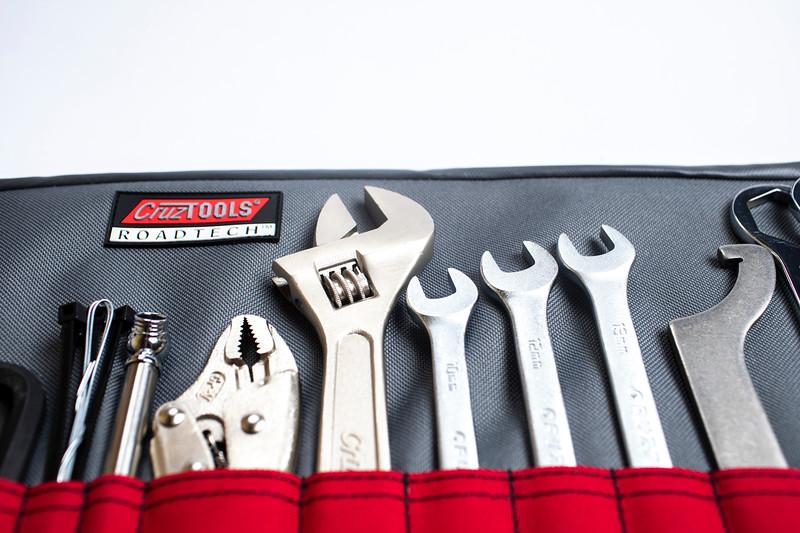
We are assuming that you have already collected an assortment of basic tools in your garage, such as ratchets, sockets, wrenches, and pliers. So, keep your eyes open for some good deals on the following:
Bike Stands

While your bike has a stand to one side so you can park it, when you are doing work on it, this stand will not be sufficient, especially if you intend to take the wheel off. You will probably see both front and rear stands, although they are rarely sold in a package. If you can only afford one, start with the rear stand, especially if you are a beginner. Once you become more comfortable with repairing the bike, you can spring for a front stand when you decide to remove the chain or rear wheel.
Tire Pressure Gauge
Your motorcycle really depends on those two tires, so you should check the tire pressure each day before you head out. Tires that are low on air can lead to poor handling and braking performance. If the tire is over-inflated, it not only wears the center of the tread off more quickly, but it reduces the area of road contact, so you lose some of the gripping action of the tire. It only takes about 1 minute to check the air pressure, and it’s well worth the trouble.
Hex Head Sockets
Sometimes called Allen Wrenches or Hex Keys, these come in a variety of shapes and sizes. Motorcycles use quite a bit of them, so keeping a few sets on hand is always a good idea. If you already have Allen wrenches, be sure to add some different types of hex heads that you put on a ratchet so you can apply more torque when necessary.
Impact Driver
Sometimes, as hard as you might try, a fastener simply will not budge. When you notice that the head of the fastener is starting to strip, it’s time to get out your impact driver. This tool is designed to “shock” or force the fastener to come loose without applying all that twisting effort. Don’t resort to a torque wrench or use a cheater or breaker bar! The last thing you want to do is break the head off the fastener and find yourself needing to drill it out!
Torque Wrench
You might be wondering why in the world you would need a torque wrench, especially when we just advised you in #4 to NOT use them. The trick here is to not use them where they aren’t needed. The truth is that nearly every fastener on your motorcycle will need a torque wrench when you put them back on. You don’t want them too loose or too tight so you will need to have a good quality torque wrench.
Cable Lubing Tool
These are very inexpensive tools that are priceless when you need to lube the cables on your bike. This works when you screw one end on the to the top of the cable and on the other end, you insert the can of cable lube. Give it a shot or two and when you see the bubbles come out at the far end of the cable, you know the job is done. Regularly lubricating the cables on your bike will ensure that they last long and stay quiet.
Brake Bleeder

If you have an older bike you might not need this, but newer models that have ABS (anti-lock) brake systems will find this vacuum hydraulic brake line bleeder a must. This will not only save you time, but you will do a much better job when it comes time to bleed the brake system on your bike. You don’t need to spend a fortune on one of these, but you will be so happy you have one when you need to get the air out of the brake system.
Motorcycle Axle Tool
Sometimes called the front axle Allen tool, this tool will help you remove the front wheel on your bike. In the old days, you had to have a separate Allen tool for this purpose for every different motorcycle you owned! Whomever invented this was sick of this problem as well and we are certainly glad that they invented this tool. Over the years, you will be too!
Oil Catch Pan
If you are a true beginner, changing the oil on your bike is so simple, you won’t have any problem doing it yourself. What you will need, however, is a place to catch the oil as it drains. An oil catch pan is perfect for the job. Once the oil is drained, you can easily pour the used oil into an empty bottle and take it to your local recycling center. Never dump motor oil in the drain or throw it out with the regular trash. Nearly every gas station and mechanic shop have a recycling station to accept your used and dirty oil.
Multimeter
If you don’t already have one of these handy devices for other jobs around the house, you will definitely want one for your bike. You don’t need a fancy gadget, just a basic multimeter that shows you resistance, DC voltage, and continuity. With this device, you can trace electrical shorts in the wiring, test the battery, and more. Once you start using a multimeter, you will wonder how you ever got by without one.
Don’t forget to pick up a service manual for your year and model. While it’s not a “tool” per se, it will come in very handy when you are working and wondering where those extra parts should have gone! Just kidding. A service manual will show you where certain parts are, how to test them, and what torque the fasteners will need to be reassembled.
Now you can really jump on your ride and feel confident about riding down the highway.
Setting up a fully equipped motorcycle workshop isn’t the work of a moment – and it won’t come cheap. The more cost-effective approach – and the one that most people tend to adopt, either by accident or design – is to let the workshop evolve over time, with tools and equipment added as the need for them arises.
There are some core essentials at the heart of a well-equipped workshop, and a good-quality 3/8in drive socket set is one. If you’re planning on working on bikes built in the past 50 years or so, then you’ll only need metric tools, so a set with a range of sockets from 8mm to 22mm should suffice, along with a couple of extension bars, a ‘wobble bar’ for hard-to-access fittings and couple of spark plug sockets.
Larger sockets may be needed, such as for the rear wheel spindle nut and, in some cases, the front drive sprocket nut. Here, a 1/2in drive socket, a short extension bar and either a ratchet or breaker bar would be a better bet. Other useful 3/8in drive socket set add-ons include a set of hex-key bits, from 4mm-10mm, and a Torx bit set in sizes T10 to T40 – or you could just buy individual bits as required.
A torque wrench is a must-have. The dilemma, however, is that while a 3/8in drive torque wrench with an operating range from around 8Nm to 60Nm will suffice for most bike jobs, some fittings, such as rear wheel spindle nuts, require a much higher torque loading, perhaps in excess of 100Nm. The problem is that a torque wrench able to tighten to 100Nm won’t operate at the much lower torque settings more common elsewhere on a motorcycle. Ms solitaire error 102 cant download game data. So you might end up needing two.
Spanners are another workshop staple. Combination spanners (open-ended at one end, ring type at the other, both the same size) are ideal, and a range of sizes from 8mm to 19mm should do it, perhaps supplemented by an adjustable spanner with a jaw opening up to 30mm or so. Ratchet spanners have their uses but they also have their limitations. Even so, 8mm, 10mm and 12mm items are handy to have.
Screwdrivers next. Flat-bladed, Phillips (plain cross on the screw head) and Pozidriv (a cross with smaller indentations bisecting each right angle at 45°) are the three main types, but the Japanese Industrial Standard – JIS – screwdriver is a must-have for anyone working on Japanese motorcycles. The JIS screw head looks like a Phillips but is subtly different and will be damaged by a regular Phillips screwdriver. JIS fittings can be identified by a recessed or raised dot in the screw head.
Other useful tools are T-handle drivers, of both Torx and hex-key types, a selection of pliers (combination, needle nose and self-locking), an oil filter removing tool, a rubber and/or plastic-faced hammer and feeler gauges and wire brushes, the final two for spark plug maintenance. Allen keys have their place, too, but in most cases a hex-key socket or T-handle driver is a better bet.
Tool Set Motorcycles The Mechanic Equipment
A decent chain-breaking/riveting tool is another good investment. Smaller-capacity bikes tend to use a split link-type of chain, but larger machines will have the endless type, which requires a special tool both to break the old chain and rivet the ends of the new one together.
Finally, consider a decent foot pump and pressure gauge, an oil drain pan, a battery conditioner and some equipment to bleed brakes – at the very least some lengths of clear plastic tubing, or ideally a bespoke brake bleeding kit. That should do it.
Consider your workshop environment, too. While it’s possible to work on a bike in a relatively confined space, you need enough room to move around the bike and remove/refit larger items such as wheels, bodywork or exhausts, along with enough light to be able to see what you’re doing. A movable inspection light is handy, while a head-mounted LED torch can shed light on the job without taking up any space.
For the safety of both you and your machine, it’s imperative that the bike is properly supported while being worked on. If the bike has a centre stand then that should do most of the time, but for more involved jobs, or when only a sidestand is fitted, proper workshop stands are the best bet.
These come in a variety of styles, such as the front and rear paddock stand-type, wheel-chocking stands, front headstock stands (for complete removal of the front wheel and forks) and a central stand that secures the machine via the swingarm pivot. Serious home mechanics should also consider investing in a hydraulic work bench, which will make access much easier (and is kinder on your knees).
If all that sounds a bit overwhelming (not to mention financially ruinous), don’t be too alarmed. As we said at the beginning, the best tool kits tend to evolve over time according to what’s needed. As your skills and experience develop, you should find your workshop does too.